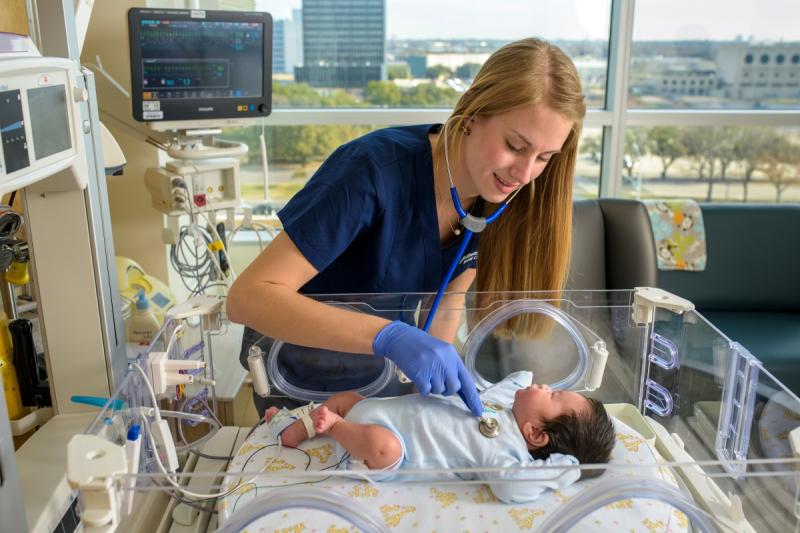
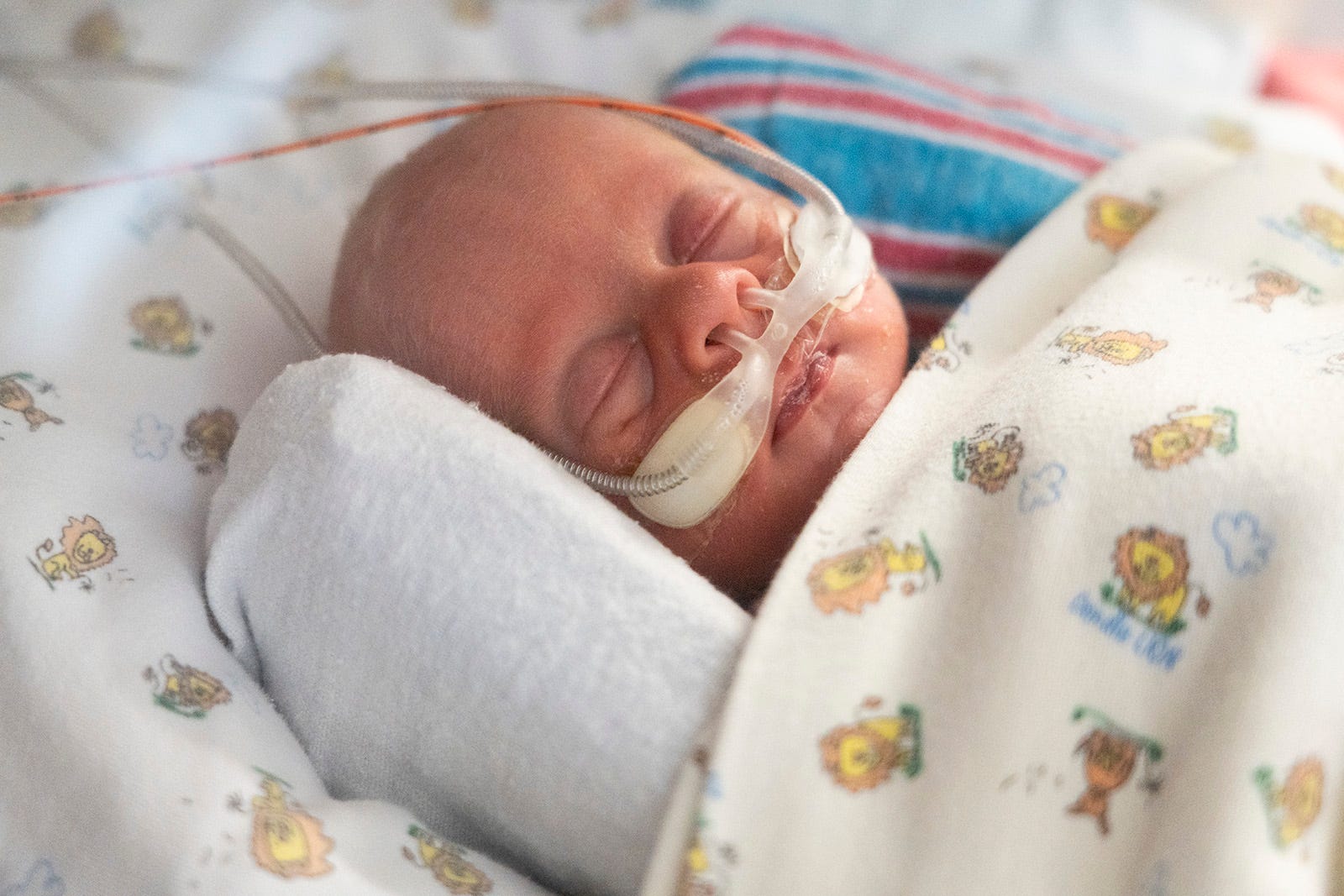

Two-week-old Juniper James rests in the neonatal intensive care unit at Dell Children’s Medical Center in 2023. Multiple studies point to the importance of breast milk or donor breast milk for premature babies.
You’ve heard the slogan: “Breast milk is best.” For premature babies, that’s especially true, and now a compilation of studies published in the American Academy of Pediatrics’ journal confirms it.

The studies examined health outcomes of babies who weigh less than 3.3 pounds and their rates of sepsis, the intestinal problem necrotizing enterocolitis, lung disease, the eye disease retinopathy of prematurity, brain development and in-hospital growth. When comparing babies who received breast milk with those who received formula, growth was the only measure in which formula showed an advantage. This is because of the difference in the calorie makeup of formula versus breast milk.
Article continues below this ad
Breast milk is recognized for its immunity benefits, which protect against infections. That is why the studies saw fewer cases of sepsis and necrotizing enterocolitis in babies who received breast milk or donor breast milk.
The American Academy of Pediatrics now clearly outlines that breast milk from the mom is the best choice. If that is not available, donor breast milk is the second-best choice. Formula can be used if the parent doesn’t want to breast feed and won’t sign off on donor milk, or there is a medical reason such as an allergy.

Most of the local neonatal intensive care units in the area have a milk preparation room like this one inside St. David’s North Austin Medical Center. This is where donor milk comes in and where moms who pump their own milk can store their milk for their babies in the neonatal intensive care unit.
Austin doctors have known this for a while, said Dr. Jennifer Goetz, a neonatalogist at St. David’s Medical Center. In the 1990s, Austin neonatalogists Dr. Sonny Rivera and Dr. George Sharpe noticed the babies they were treating who had breast milk did better than babies who had formula, particularly in the rates of necrotizing enterocolitis.
Article continues below this ad

Luke Dierker checks on his daughter, 2-week-old Everleigh Grace Dierker, as she rests in the neonatal intensive care unit at Dell Children’s Medical Center in 2023. Austin has the largest breast milk bank in the world, which makes access to donor milk possible for any premature baby locally.
They founded the Mothers’ Milk Bank 25 years ago. It is now the largest in the world and serves about 75,000 premature and medically fragile babies a year from around the country. The bank processes about 5,000 ounces of donated breast milk a day. That milk is pasteurized and analyzed for calorie count, which allows doctors to order higher-calorie milk for babies who need it.
The availability of donor milk, combined with Austin hospitals’ commitment to providing lactation support to moms whose babies are in the NICU, has meant that babies here are more likely to get breast milk than in other areas of the country. At St. David’s, Goetz said, they almost never give formula to babies younger than 34 weeks because doctors are able to educate parents about the importance of breast milk.
Article continues below this ad
“We are all passionate about it,” she said. “Parents really understand that we have this great resource of donor milk.”
Many of the NICU babies are too young to breastfeed and need to be tube-fed milk their mother has pumped or the milk the hospital receives from the milk bank. Within the first 12 hours, babies typically receive breast milk through a tube. Mothers are encouraged to try pumping as soon as possible after the baby’s birth, but some moms have medical complications that might reduce their supply or delay their ability to pump. That’s when doctors can start the babies on donor milk and transition to mom’s milk if it becomes available.
The donor milk often comes from moms around Texas who have built up an extra supply in their freezers. Some moms specifically pump for the milk bank while nursing their baby, knowing their supply is adequate to do both. Others continue pumping after the loss of an infant, donating milk to honor their babies, Goetz said.
“The nice thing about this community is I’ve never not been able to get donor milk,” she said.
Article continues below this ad
Goetz hopes the routine use and acceptance of breast milk for NICU babies in Austin will continue to spread around the country.
“Word is getting out, especially in premature babies, that this is the standard of care,” she said.
How to donate breast milk
Find out more about becoming a milk bank donor at milkbank.org/donate-milk.
Article continues below this ad
link