Dr. Turbendian Schematic
When a child is born with only one functioning heart ventricle – a condition known as single ventricle congenital heart disease – a series of surgeries can reroute blood flow to help them survive. The final operation, called the Fontan procedure, allows children to grow into adulthood. But over time, this circulation – which depends on blood flowing passively to the lungs without a pumping chamber – can lead to serious complications.
Harma Turbendian, MD, a congenital pediatric heart surgeon at OSF HealthCare Children’s Hospital of Illinois, is working to change that. His innovative research explores how living donor heart tissue could be used to create a pumping mechanism for Fontan patients – potentially improving blood flow and reducing long-term risks.
“There are a lot of people around the world trying to figure out instead of having the blood flow be passive, like after a Fontan procedure, can we put a pump in the area, and help kids with single ventricle congenital heart disease? And could this help mitigate the bad side effects of that type of physiology?” Dr. Turbendian discusses.
Building on a breakthrough
The idea stems from an earlier medical breakthrough called partial heart transplantation, which allows surgeons to use living donor valves from hearts that can’t be transplanted in full. That innovation, first developed by Taufiek Rajab, MD, at Arkansas Children’s Hospital, opened the door to using viable heart tissue for other purposes.
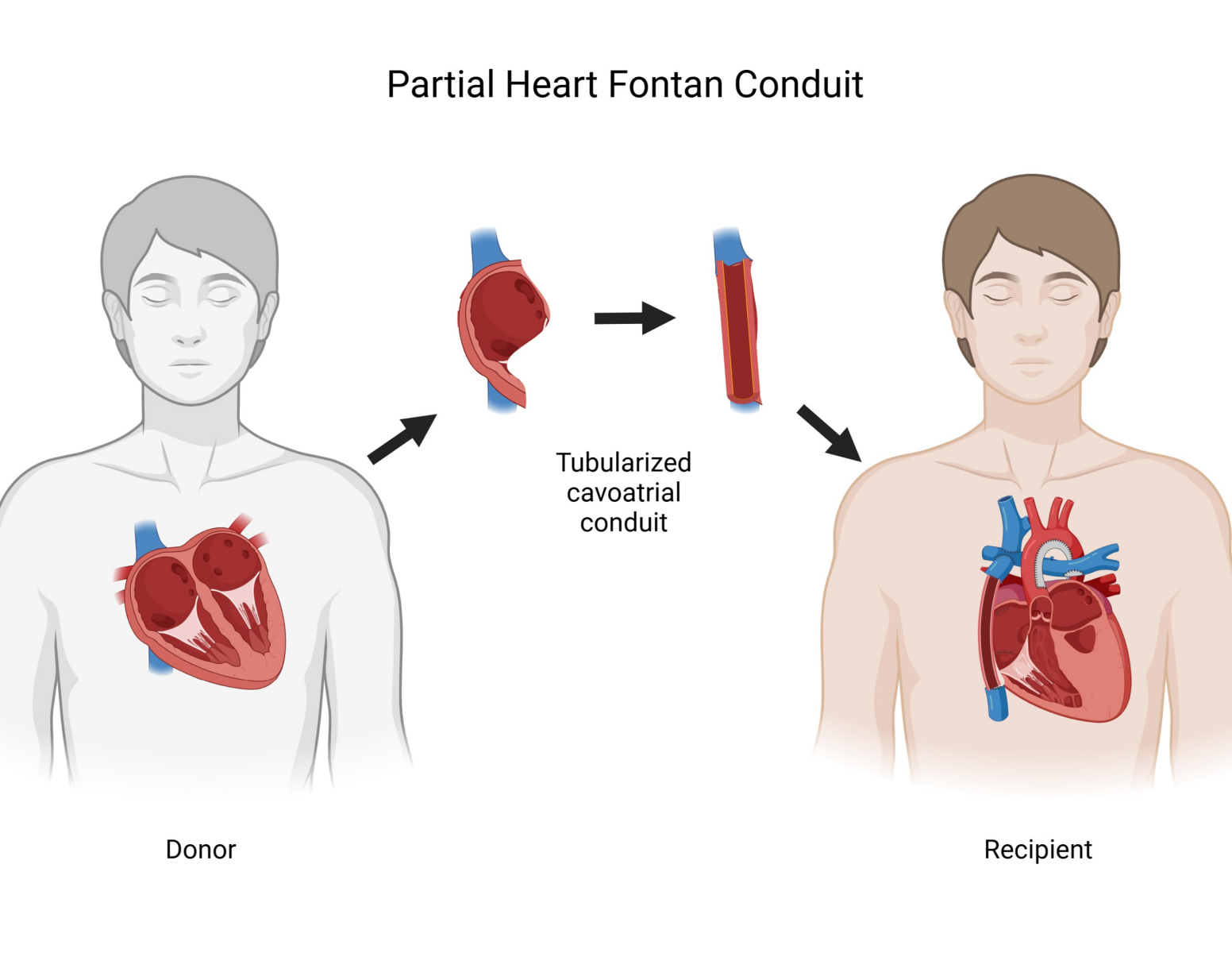
“I said, what if we took a right atrium from a donor and made it into a pumping tube,” Dr. Turbendian recollects. “Then we could use that as part of the Fontan surgery, hopefully having a clinical effect.”
This line of thinking led him to develop a technique called the Cavoatrial Partial Heart Transplant (CAPHT). The goal is to transform the right atrium from a donor heart into a pumping tube that could be used during or after Fontan surgery to help blood flow more efficiently to the lungs.
Testing the concept
With support from the team at Jump Trading Simulation & Education Center and research funding from OSF HealthCare Children’s Hospital of Illinois in Peoria, Illinois, Dr. Turbendian began testing the idea using both porcine (pig) tissue and human cadavers. At a research lab in Arkansas, his team connected donor atrial tissue to a cardiopulmonary bypass circuit, an external device that acts like the heart and lungs.
The results were promising.
The right atrial tissue demonstrated pulsatility, the ability to beat, and could even be paced externally with a pacemaker. The team measured an average pulse pressure of 9.2 mmHg (millimeters of mercury) showing that the tissue could generate blood flow on its own.
“When we connected the tissue to the circuit, we were able to show that it is able to pump. We can pace it externally with a pacemaker, and it can generate blood pressure with its pumping mechanism,” Dr. Turbendian says.
These early findings were recently published in the Annals of Thoracic Surgery Short Reports, an international peer-reviewed journal of cardiothoracic surgery. The publication marks a significant step in validating the concept and sets the stage for future studies.
Looking ahead
The next phase of research will test whether the technique can work in living subjects, starting with donor pig tissue transplanted into another pig to see if the tissue continues to function independently. It’s a long and complex process that could take years, but the potential impact is enormous.
If successful, the Cavoatrial Partial Heart Transplant could one day provide Fontan patients, both children and adults, with a new, living pump to support their circulation and improve quality of life.
Why it matters
Worldwide, an estimated 50,000 to 70,000 patients live with a Fontan circulation. While the surgery has saved countless lives, it leaves patients dependent on a passive blood flow system that can cause fatigue, liver problems and heart failure over time.
By reimagining how donor heart tissue can be used, Dr. Turbendian and his colleagues hope to create a new generation of surgical options; ones that don’t just extend life but also improve how the heart works long after childhood.
link